
What a Monthly Budget Actually Is (and Isn't)

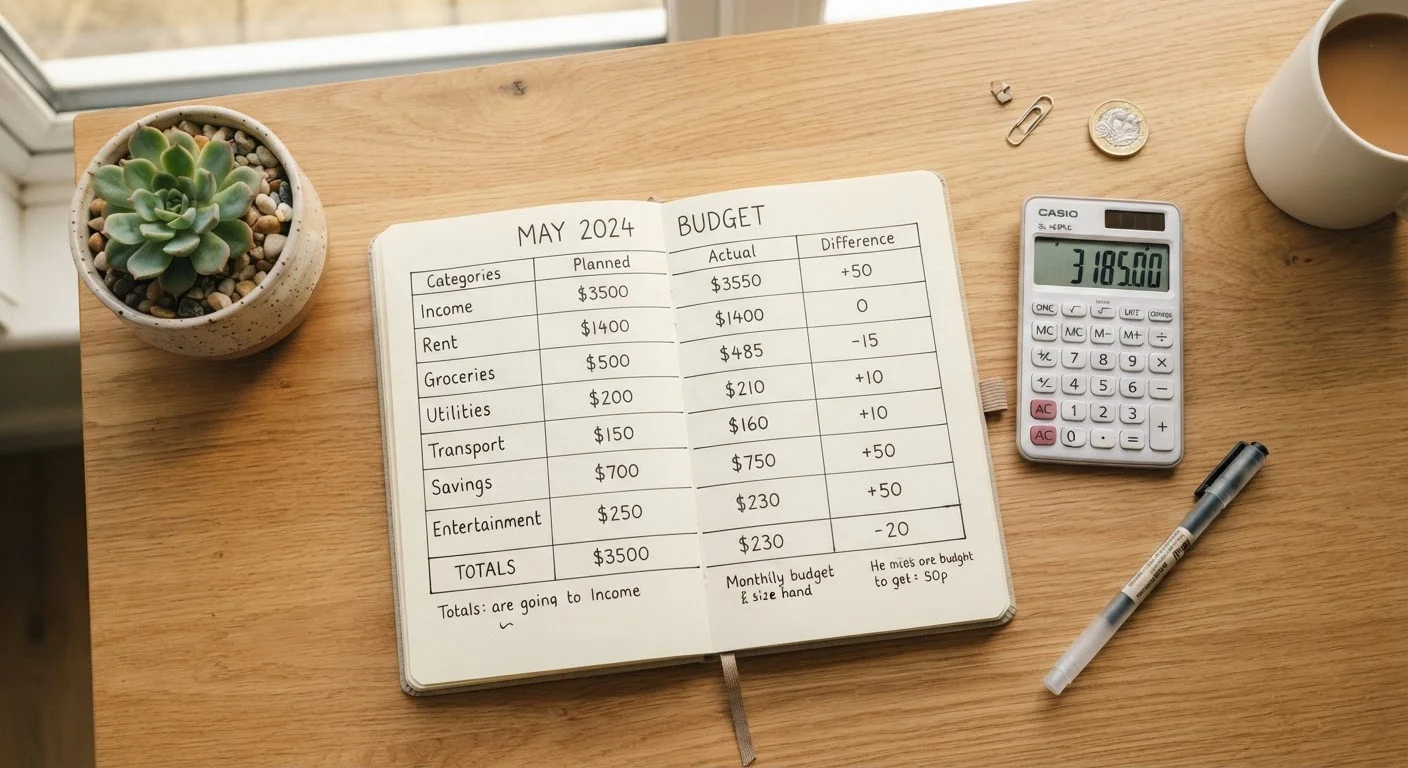
Photo: AdvisorBooth.net editorial
Key Takeaways
- A budget is a proactive spending plan, not a record of what you already spent.
- Budgets work for any income level - you don't need to be in debt to benefit from one.
- Every budget will need adjustments; that's a feature, not a failure.
- The goal of a budget is alignment between your money and your priorities.
- A monthly timeframe matches most Americans' pay and billing cycles, making it practical.
The Core Idea: A Plan, Not a Record
Most confusion about budgets starts with a simple mix-up: people think a budget is a log of what they spent. It isn't. A budget is a plan you make in advance - before the month begins - that decides where each dollar of income will go.
The distinction matters enormously. A spending tracker tells you what happened to your money. A budget tells your money what to do. One is retrospective; the other is proactive. Both are valuable, but only a budget gives you control before the decisions are made.
A monthly timeframe is the most practical for most Americans because it aligns with pay cycles, rent and mortgage due dates, utility bills, and subscription renewals. When you plan in monthly terms, your budget speaks the same language as your financial life.
Budget vs. Spending Tracker: A Key Distinction
What a Budget Is Not
A budget is not a financial straitjacket. It doesn't mean you're in debt, struggling, or depriving yourself. It doesn't require a spreadsheet degree or a perfect income. And it definitely doesn't mean every dollar is locked in place forever.
Some of the most persistent myths about budgeting - that it's only for people in financial trouble, or that it requires giving up everything enjoyable - are simply wrong. See our overview of common budgeting misconceptions for a full breakdown of what holds people back.
A budget is also not a one-time document. Budgets are living plans. Life changes - income shifts, unexpected expenses arrive, priorities evolve. A budget that you revisit and adjust monthly is far more powerful than a perfect plan you made once and abandoned. Our monthly budget review checklist walks through exactly how to do that reset each month.
Start With What You Already Spend
The Basic Structure of a Monthly Budget
Every budget, regardless of how simple or complex, rests on one equation: Income minus planned expenses equals zero (or a surplus directed toward savings or debt). The goal is to give every dollar a job before the month starts.
Most budgets organize expenses into two broad types: fixed and variable. Fixed expenses - like rent, insurance premiums, and loan payments - stay the same each month. Variable expenses - like groceries, gas, and dining - fluctuate. Understanding this difference is foundational. Our article on fixed vs. variable expenses explains why the distinction changes where you have room to adjust.
Within those two categories, most budgets include lines for essentials (housing, food, utilities, transportation), savings and debt repayment, and discretionary spending. The relative sizes of those buckets vary by framework - the 50/30/20 guideline, for example, suggests roughly 50% to needs, 30% to wants, and 20% to savings and debt - but the structure itself remains consistent.
~1 in 3
Americans with a detailed household budget
Gallup polling has consistently found that fewer than one-third of American households maintain a detailed monthly budget, despite widespread awareness of personal finance basics.
50/30/20
Popular income-allocation guideline
The 50/30/20 framework - popularized in personal finance literature - allocates roughly 50% of after-tax income to needs, 30% to wants, and 20% to savings and debt repayment.
2-3 months
Time to calibrate an accurate budget
Financial educators commonly note that it takes two to three months of real spending data before a household budget accurately reflects actual patterns rather than optimistic estimates.
Why Monthly Budgets Actually Work
A monthly budget works because it forces a conversation between your income and your intentions. Without a plan, spending tends to fill available space - a phenomenon behavioral economists sometimes call lifestyle creep. A budget creates a boundary that spending habits must respect.
Budgets also create visibility. Many people are genuinely surprised by where their money goes once they write it down. That awareness - even before any behavioral change - is the first step toward alignment. If you encounter unfamiliar terms along the way, our budgeting glossary defines the vocabulary you'll encounter most often.
Finally, a budget builds a habit of forward-thinking. Instead of reacting to financial stress after it arrives, you anticipate it. You plan for irregular expenses like car maintenance or holiday gifts before they hit. Over time, that shift from reactive to proactive is what makes a monthly budget genuinely empowering rather than restrictive.
This article is for general informational and educational purposes only and does not constitute personalized financial advice. Readers are encouraged to consult a qualified financial professional regarding their individual circumstances.
Frequently Asked Questions
The content on this site is for informational purposes only and is not a substitute for professional advice. Always consult a qualified professional for guidance specific to your situation.