
Fixed vs. Variable Expenses: Knowing the Difference Changes How You Budget

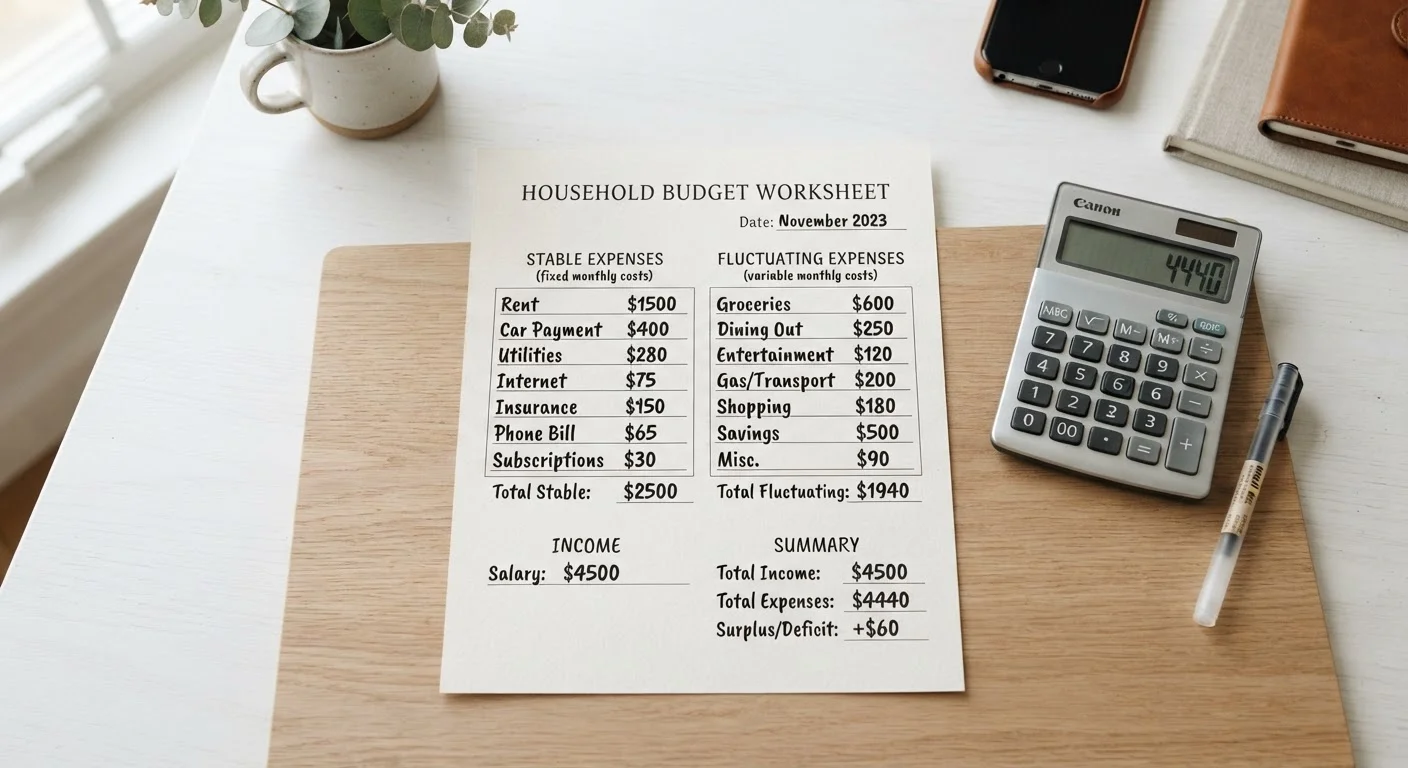
Photo: AdvisorBooth.net editorial
Key Takeaways
- Fixed expenses stay the same each month and are typically harder to change in the short term.
- Variable expenses fluctuate and are generally the first place to look when cutting spending.
- Knowing your fixed costs tells you the minimum income you need to stay financially stable.
- Tracking variable expenses reveals spending patterns that are often surprising and adjustable.
- A solid budget accounts for both categories separately so you can make smarter trade-offs.
What Makes an Expense Fixed?
A fixed expense is a cost that remains the same amount every billing cycle, regardless of your behavior during that period. Your rent or mortgage payment is the clearest example - it doesn't go up because you cooked fewer meals at home or go down because you had a lean month. The same applies to car loan payments, most insurance premiums, and subscription services locked into annual plans.
The defining trait isn't just consistency - it's that these costs are largely contractual. You've already committed to them, often in writing. That makes them harder to adjust in the short term, even if your income drops suddenly. This is why understanding your fixed expenses is the essential first step in any honest budget. As explained in what a monthly budget actually is, a budget's core function is matching your income to your real obligations - and fixed costs define those obligations most clearly.
Common fixed expenses include:
- Rent or mortgage payments
- Auto loan or lease payments
- Health, auto, and renters insurance premiums
- Student loan payments on standard repayment plans
- Annual or locked-in subscription fees
What Makes an Expense Variable?
A variable expense changes month to month based on usage, choices, or circumstances. Groceries, gasoline, dining out, utilities, clothing, and entertainment all fall into this category. You have a meaningful degree of control over these costs - though not complete control. A cold winter will push your heating bill higher regardless of your intentions.
Variable expenses are where most people's budgets have actual breathing room. They're also where spending tends to creep up unnoticed. A few extra takeout orders, an unplanned online purchase, or a trip to a warehouse store can quietly shift your monthly total by hundreds of dollars without triggering any alarm. This is why common budgeting misconceptions often involve variable spending - people underestimate how much flexibility they already have.
Common variable expenses include:
- Groceries and household supplies
- Gasoline or rideshare costs
- Utilities (electricity, gas, water)
- Dining out and entertainment
- Clothing and personal care
- Medical co-pays and out-of-pocket costs
| Criterion | Fixed Expenses | Variable Expenses |
|---|---|---|
| Amount each month | Stays the same | Changes based on use or choice |
| Ease of reducing short-term | Difficult - often contractual | Easier - depends on daily decisions |
| Examples | Rent, loan payments, insurance | Groceries, gas, dining out |
| Budget role | Sets your financial floor | Where flexibility lives |
| Predictability | High - easy to plan around | Low to medium - requires tracking |
| Savings lever | Long-term (refinancing, moving) | Short-term (immediate cutbacks) |
How the Distinction Changes Your Budgeting Strategy
Once you separate your expenses into these two buckets, budgeting stops feeling like a generic exercise and starts revealing specific opportunities. Your fixed costs define your financial floor - the minimum income required to keep your commitments. If your fixed expenses total $2,400 per month, you know that no budget strategy on earth helps you if your take-home pay falls below that number for long.
Variable expenses, by contrast, become the active levers you can pull. Rather than treating your entire budget as one undifferentiated pile of money, you can make targeted decisions: reduce dining out by $80, pause one streaming service, consolidate errands to save on gas. These aren't sacrifices - they're adjustments with measurable impact.
~33%
Average share of income spent on housing alone
The U.S. Bureau of Labor Statistics Consumer Expenditure Survey consistently finds housing - a primary fixed cost - consumes roughly a third of average household spending.
$3,000+
Average annual household spending on dining out
BLS Consumer Expenditure data shows food away from home is one of the largest single variable expense categories for American households.
A practical approach is to list fixed expenses first and subtract them from your monthly take-home income. Whatever remains is available to cover variable needs and discretionary wants. This single reframe - treating variable spending as what's left rather than what's given - shifts your decision-making in a meaningful way. For readers who find traditional tracking difficult, lower-friction saving approaches can complement this framework without requiring a spreadsheet.
It's also worth noting that some costs blur the line. A car payment is fixed, but what you pay at the gas station each month is variable. If you're navigating a decision between owning and leasing a vehicle, comparing the long-term costs of leasing versus buying can clarify how that choice affects both sides of your budget.
This article is for general informational and educational purposes only and does not constitute personalized financial advice. Consult a qualified financial professional for guidance specific to your situation.
The content on this site is for informational purposes only and is not a substitute for professional advice. Always consult a qualified professional for guidance specific to your situation.