
Envelope Budgeting in a Digital World

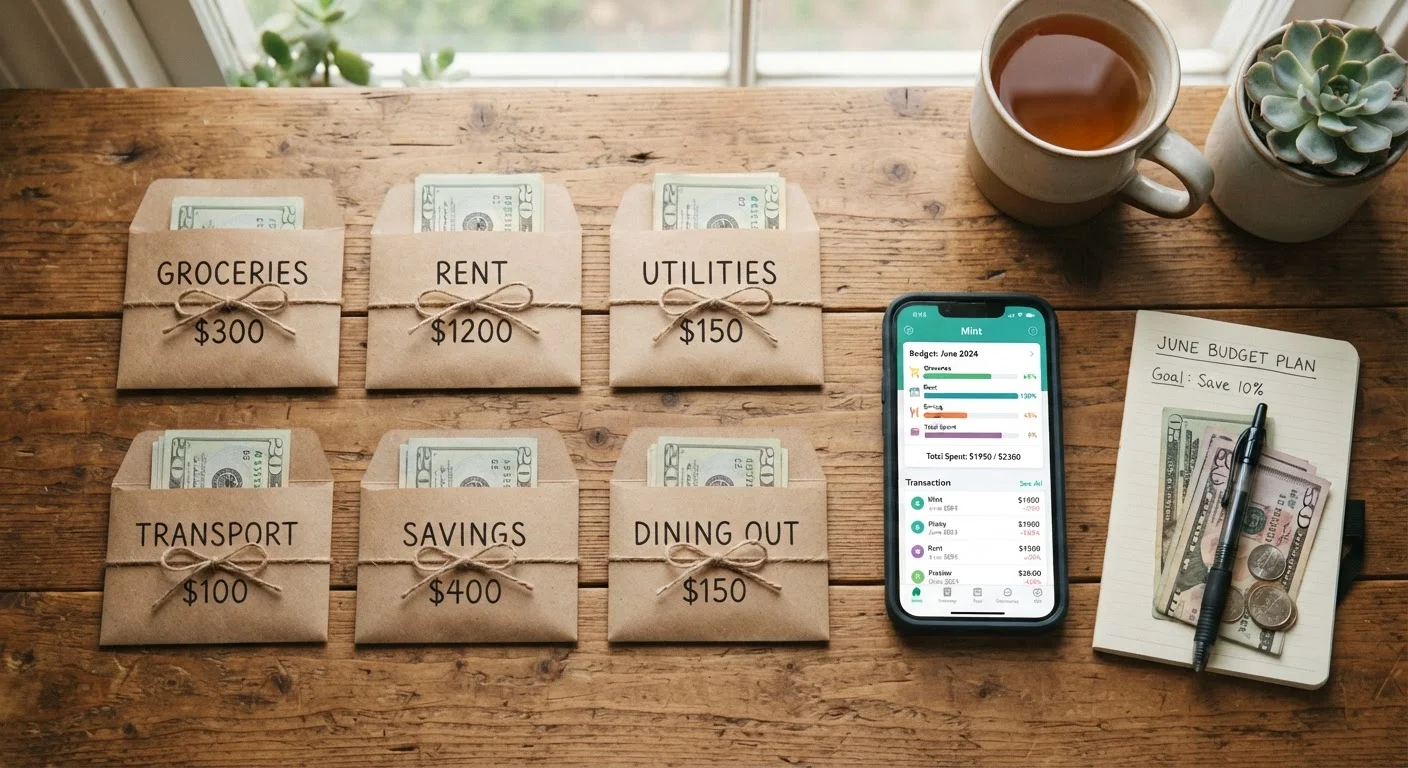
Photo: AdvisorBooth.net editorial
Key Takeaways
- Envelope budgeting assigns every dollar to a spending category before the month begins.
- You don't need physical cash - digital envelopes work just as well for most people.
- The system builds spending awareness by making category limits concrete and visible.
- Once a digital envelope is empty, spending in that category stops until the next cycle.
- Regular monthly reviews help you refine category amounts over time.
What Is Envelope Budgeting?
Envelope budgeting is a cash-management system where you divide your take-home income into labeled spending categories - groceries, gas, dining out, utilities - and allocate a fixed dollar amount to each. Traditionally, you'd stuff physical cash into paper envelopes. When an envelope was empty, spending in that category stopped. No borrowing from next month, no gray areas.
The method's strength is its directness. Unlike tracking-after-the-fact approaches, envelope budgeting forces you to make deliberate trade-offs before you spend. That front-loaded decision-making is why many people find it more effective than reviewing a credit card statement after the damage is done.
For a broader look at how this method compares to other frameworks, see Zero-Based Budgeting vs. the 50/30/20 Rule, which explores two other popular approaches side by side.
Start With Fewer Envelopes
Adapting the Method for a Cashless Life
Most Americans rarely carry cash today - and that's fine. The envelope concept translates cleanly into digital form. Instead of paper and bills, you use either a dedicated budgeting app or a simple spreadsheet to create virtual envelopes. The rules stay identical: each category gets a preset amount, and you track every transaction against it in real time.
Choosing the right tool matters for consistency. Paper Budget vs. Spreadsheet vs. App: Choosing Your Format walks through the trade-offs so you can pick a format you'll actually maintain. If spreadsheets feel overwhelming, a purpose-built app with envelope or category features can automate much of the tracking. If you prefer tactile control, a simple table in a document works just as well.
What matters most is that the system reflects your real spending categories - not an idealized version of them. If you regularly spend money on pet supplies or streaming subscriptions, those deserve their own envelopes.
Digital Envelopes Require Active Tracking
How to Set Up Your Digital Envelopes
Follow these steps to build a functional digital envelope budget from scratch. Plan to spend 20-45 minutes on your first setup; future months take only a few minutes to update.
What you will need
Calculate your monthly take-home income
Add up all reliable after-tax income sources for a typical month - wages, freelance payments, side income. If your income varies, use a conservative estimate based on your three lowest recent months rather than your average. Building your budget on an income floor prevents overspending in leaner months.
List every spending category you actually use
Review your past statements and write down every category where money left your accounts. Common categories include housing, utilities, groceries, transportation, dining out, subscriptions, clothing, personal care, entertainment, and savings. Don't sanitize this list - capture your real habits, not your ideal ones.
Group very small or infrequent expenses (under $10/month) into a single miscellaneous envelope to avoid complexity overload.
Assign a dollar amount to each envelope
Using your statements as a guide, set a realistic spending limit for each category. The total across all envelopes - including savings - must equal your monthly take-home income. This zero-sum constraint is the core discipline of the method: every dollar is spoken for before the month starts.
If your totals exceed your income, reduce discretionary envelopes (dining, entertainment, subscriptions) before cutting essentials. You may need to make uncomfortable but clarifying trade-offs here.
Record every transaction against its envelope
Each time you spend money, subtract the amount from the relevant digital envelope immediately - or at minimum, once daily. The tracking habit is what makes the system work. A purchase recorded three weeks late provides no real-time guardrail against overspending.
If you use a credit card for convenience or rewards, treat it exactly like cash: deduct the purchase from your envelope the moment you swipe, not when the bill arrives.
Stop spending when an envelope hits zero
This is the non-negotiable rule. When a category envelope reaches $0, spending in that category pauses until you either reallocate funds from another envelope or the next budget cycle begins. Consciously moving money between envelopes is allowed - but it must be a deliberate choice, not a passive override. That moment of friction is the system's built-in accountability mechanism.
Review and adjust at the end of each month
Before setting next month's envelopes, spend 10 minutes reviewing how each category performed. Which envelopes ran out early? Which had consistent surpluses? Use this data to refine amounts - a budget that reflects your real life is far more sustainable than one built on optimistic projections. After two or three months of adjustments, most people find their categories stabilize.
For a deeper look at common misconceptions that derail new budgeters, see Budgeting Myths That Keep People from Starting.
This article is for general informational and educational purposes only and does not constitute personalized financial advice. For guidance tailored to your specific situation, consult a qualified financial professional.
The content on this site is for informational purposes only and is not a substitute for professional advice. Always consult a qualified professional for guidance specific to your situation.