
What the Numbers on Speed Limit Signs Actually Mean in Law

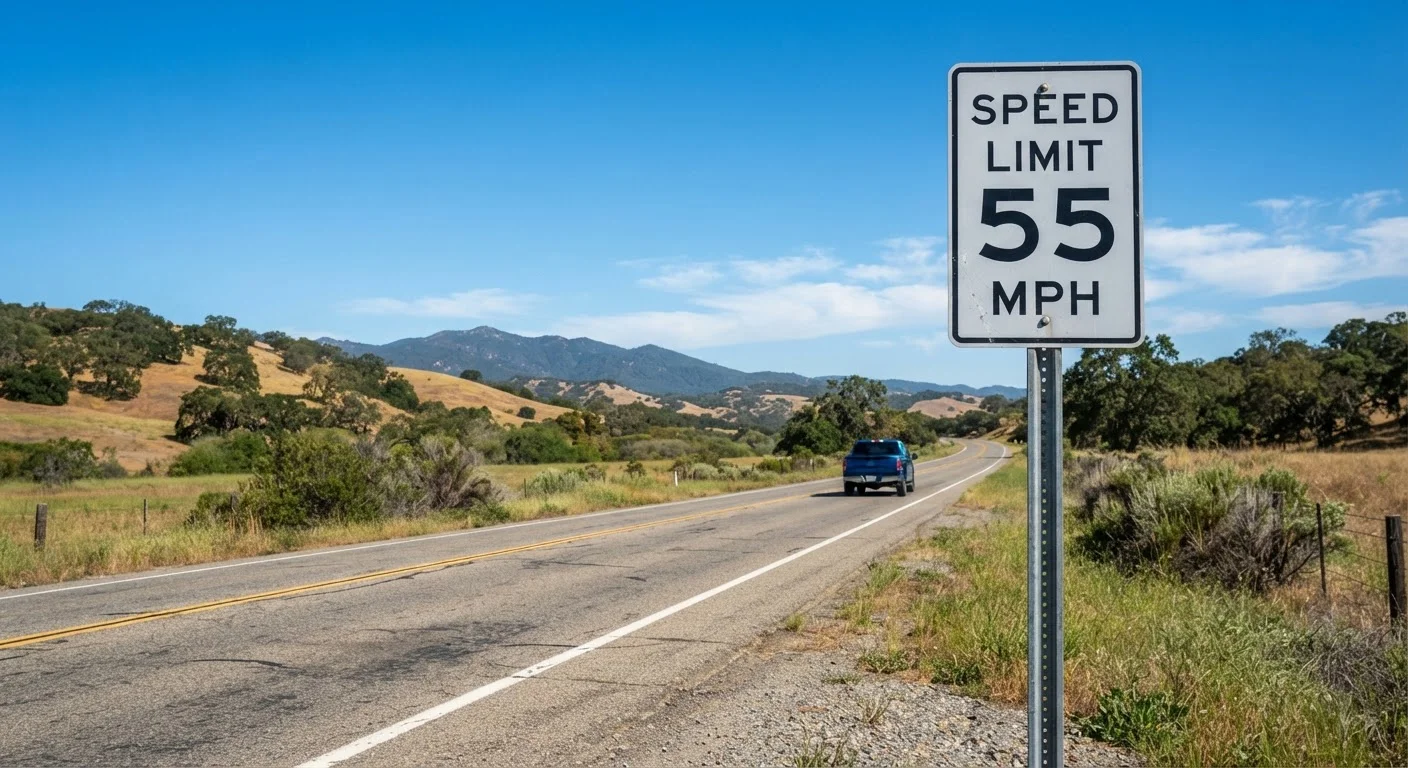
Photo: AdvisorBooth.net editorial
Key Takeaways
- Posted speed limits are legal maximums, not targets or suggestions.
- States set their own limits, which is why the same road type can have different limits across state lines.
- Many states use a 'basic speed law' requiring drivers to slow below the posted limit when conditions demand it.
- Driving at the posted limit can still result in a citation if conditions make that speed unsafe.
- Statutory speed limits apply even when no sign is visible, based on road type and jurisdiction.
The Legal Force Behind the Number
When you see a speed limit sign, that number is a codified legal maximum - not a guideline, a suggestion, or a typical traffic flow indicator. In every U.S. state, traveling above the posted limit constitutes a moving violation under the state's vehicle code. The consequences range from fines and demerit points to license suspension for extreme or repeat offenses.
What many drivers don't realize is that the authority to set speed limits is primarily a state function. The federal government historically tied limits to highway funding - most famously with the national 55 mph limit introduced in 1974 - but since 1995, states have had full authority to set limits on most roads. This is why you can cross a state line and see the legal maximum jump or drop by 10 mph on the same style of road.
65-85 mph
Interstate speed limit range across U.S. states
Since Congress repealed the national maximum speed limit in 1995, states have set their own interstate limits, resulting in this range as of current state laws.
~33%
Of fatal crashes involving speeding
According to the National Highway Traffic Safety Administration (NHTSA), speeding is a factor in roughly one-third of all traffic fatalities annually in the United States.
25 mph
Common statutory limit in residential areas
Many U.S. states set a default statutory speed limit of 25 mph for residential streets even when no sign is posted, based on standard vehicle codes.
Types of Speed Limits and How They're Set
Not all speed limits work the same way. Understanding the distinctions helps you know what applies when and why:
- Statutory limits: These are baseline speeds written into state law that apply to specific road types - such as school zones, residential streets, or business districts - even when no sign is posted. A driver is legally expected to know these defaults.
- Posted limits: Signs reflecting traffic engineering studies, road design, and local policy. Engineers analyze factors like road width, sight lines, intersection frequency, and pedestrian activity to recommend a limit.
- Variable limits: Some highways use electronic signs that change the displayed limit based on real-time conditions - congestion, weather, or accidents. These carry the same legal weight as fixed signs.
Speed limits on interstate highways currently range from 65 mph to 85 mph across U.S. states, with Texas allowing 85 mph on a specific toll road segment - the highest posted limit in the country.
The Basic Speed Law: Why the Posted Number Isn't Always Enough
Most states include a basic speed law (sometimes called a prima facie law) in their traffic codes. This principle holds that a driver must operate at a speed that is reasonable and prudent for current conditions - regardless of what the sign says.
In practical terms: if it's raining heavily, visibility is poor, or there's an accident ahead, driving at 65 mph on a road posted for 65 mph could still be legally actionable. Law enforcement can cite a driver whose speed was unsafe for the situation even if it didn't technically exceed the posted number.
The flip side - driving significantly below posted limits without cause - can also create hazards and may be a citable offense in some states if it obstructs traffic flow.
Adjust Speed Before Conditions Demand It
How Enforcement Varies and What Drivers Should Know
Speed limit enforcement is not uniform across jurisdictions. States differ in how they handle marginal speeding - some apply strict zero-tolerance enforcement, while others give officers discretion for drivers traveling just a few miles per hour over the limit. Radar, laser (LIDAR), and automated speed cameras are all used depending on state and local law; several states restrict or prohibit automated camera enforcement entirely.
Drivers should also be aware of enhanced-penalty zones. School zones and construction zones typically carry doubled fines and, in many states, mandatory court appearances for violations - even at relatively low speeds. These aren't arbitrary: pedestrian vulnerability and worker safety drive the stricter standards.
Understanding these legal fundamentals is part of confident, informed driving - the same way knowing what your dashboard indicators mean helps you respond appropriately to your vehicle. For a related reference on understanding vehicle signals, see our guide to dashboard warning lights.
This article provides general educational information about traffic law and speed limits in the United States. Laws vary by state and locality. Consult official state traffic codes or a licensed attorney for guidance specific to your situation.
Frequently Asked Questions
The content on this site is for informational purposes only and is not a substitute for professional advice. Always consult a qualified professional for guidance specific to your situation.