
Understanding the Sticker Price: MSRP, Invoice, and Everything Between

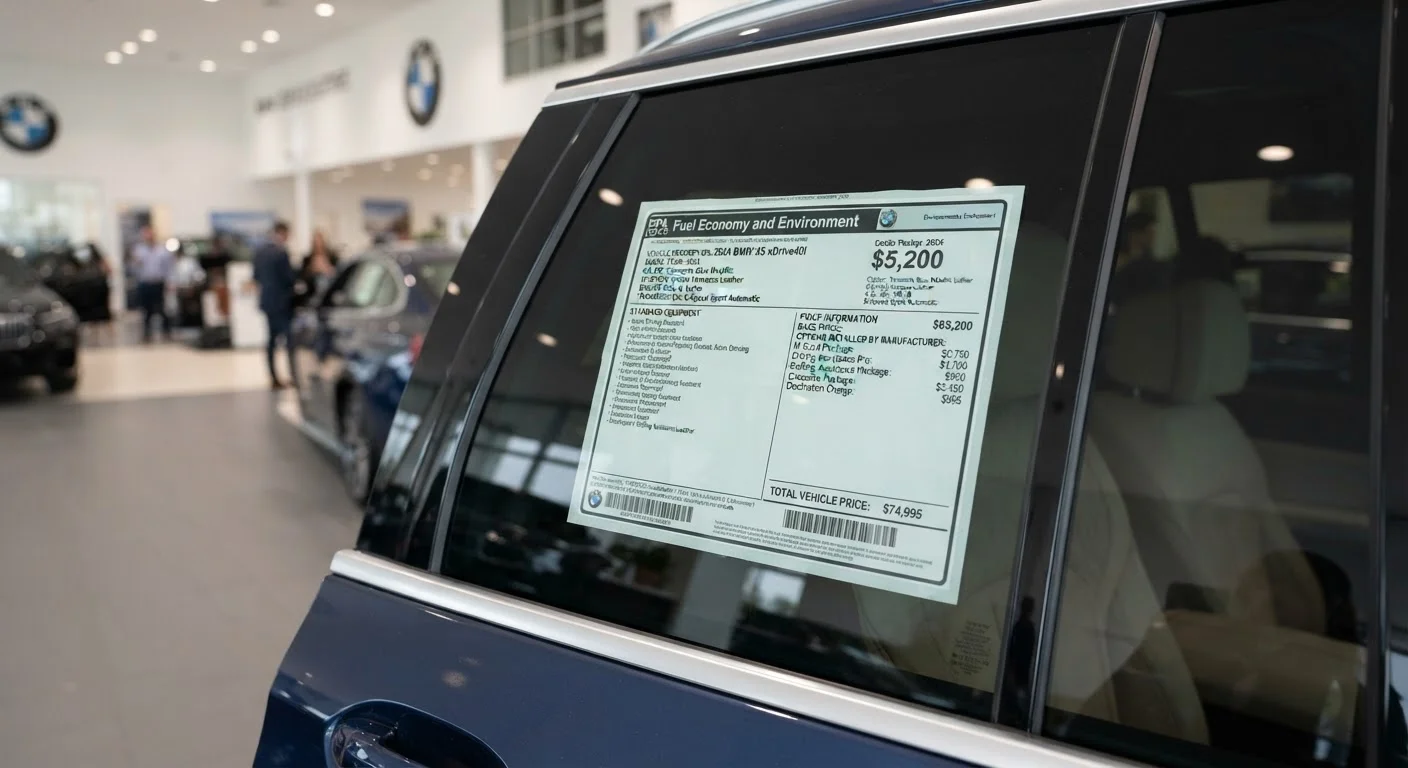
Photo: AdvisorBooth.net editorial
What Every Number on the Window Sticker Means
Walk into any new-car dealership and you'll find a federally required label - commonly called the Monroney sticker - affixed to every vehicle's window. This sticker, mandated by the Automobile Information Disclosure Act, breaks down pricing in a standardized format. Understanding each line item is the first step to negotiating with confidence.
MSRP (Manufacturer's Suggested Retail Price) is the automaker's recommended selling price. It covers the base vehicle plus any factory-installed options. "Suggested" is the operative word: dealers are not legally required to sell at MSRP, and transaction prices regularly fall above or below it depending on market conditions.
Base price reflects the vehicle with its standard features and no add-ons. The sticker then lists individual factory-installed options - packages like a sunroof, premium audio, or advanced driver assistance - each priced separately before being totaled into the MSRP figure.
Destination and delivery charge (also called the freight charge) covers transporting the vehicle from the assembly plant to the dealership. This fee is set by the manufacturer, is non-negotiable, and is the same regardless of which dealer you visit - so it's a true pass-through cost, not dealer profit.
Invoice Price, Dealer Markup, and the Space Between
The invoice price is what the manufacturer charges the dealer for the vehicle. It's often cited as a negotiating benchmark, but it's an incomplete picture. Dealers frequently receive holdback - a percentage of MSRP (commonly 2-3%) that the manufacturer pays back to the dealer after the sale. Dealer incentives and volume bonuses can also reduce the dealer's actual cost below the stated invoice.
This means the gap between invoice and what the dealer actually paid can be larger than it appears. Knowing the invoice price is useful context, but it shouldn't be treated as the dealer's true floor.
In high-demand markets or for popular models, dealers sometimes add a market adjustment or dealer markup - an amount above MSRP printed on a separate addendum sticker. These are entirely at the dealer's discretion and are negotiable, even if sales staff present them as fixed. For a deeper look at how pricing psychology shapes what feels like a deal, see how to distinguish a genuine deal from clever pricing.
Invoice Price Isn't Always the Dealer's Floor
Conversely, dealer discounts below MSRP appear when inventory is high or a model year is ending. These reductions are also negotiable starting points, not automatic savings.
Dealer-Installed Add-Ons and What to Watch For
Beyond the factory sticker, many dealers attach a secondary label listing dealer-installed accessories: paint protection film, fabric guard, window tinting, or cargo nets. Unlike factory options, these are added at the dealership and priced at the dealer's discretion. Markups on these items can be substantial relative to their cost.
Review the addendum sticker carefully. If an accessory was installed before you expressed interest, the dealer may present it as a given - but its price is generally negotiable, and in some cases you can ask that it be removed from the deal entirely if the item hasn't been applied yet.
The sticker price also does not include taxes, registration fees, or financing costs. These are added later in the transaction. Focusing only on the window price without accounting for these "out-the-door" figures is a common misstep - one covered in detail in our look at car-buying myths that cost buyers money.
Before stepping into a negotiation, research the MSRP, invoice, and recent transaction prices for the specific trim and options you want. Treat the sticker as the starting point of a conversation, not the final word.
The content on this site is for informational purposes only and is not a substitute for professional advice. Always consult a qualified professional for guidance specific to your situation.