
Tile vs. Luxury Vinyl Plank: Flooring Decisions That Actually Hold Up

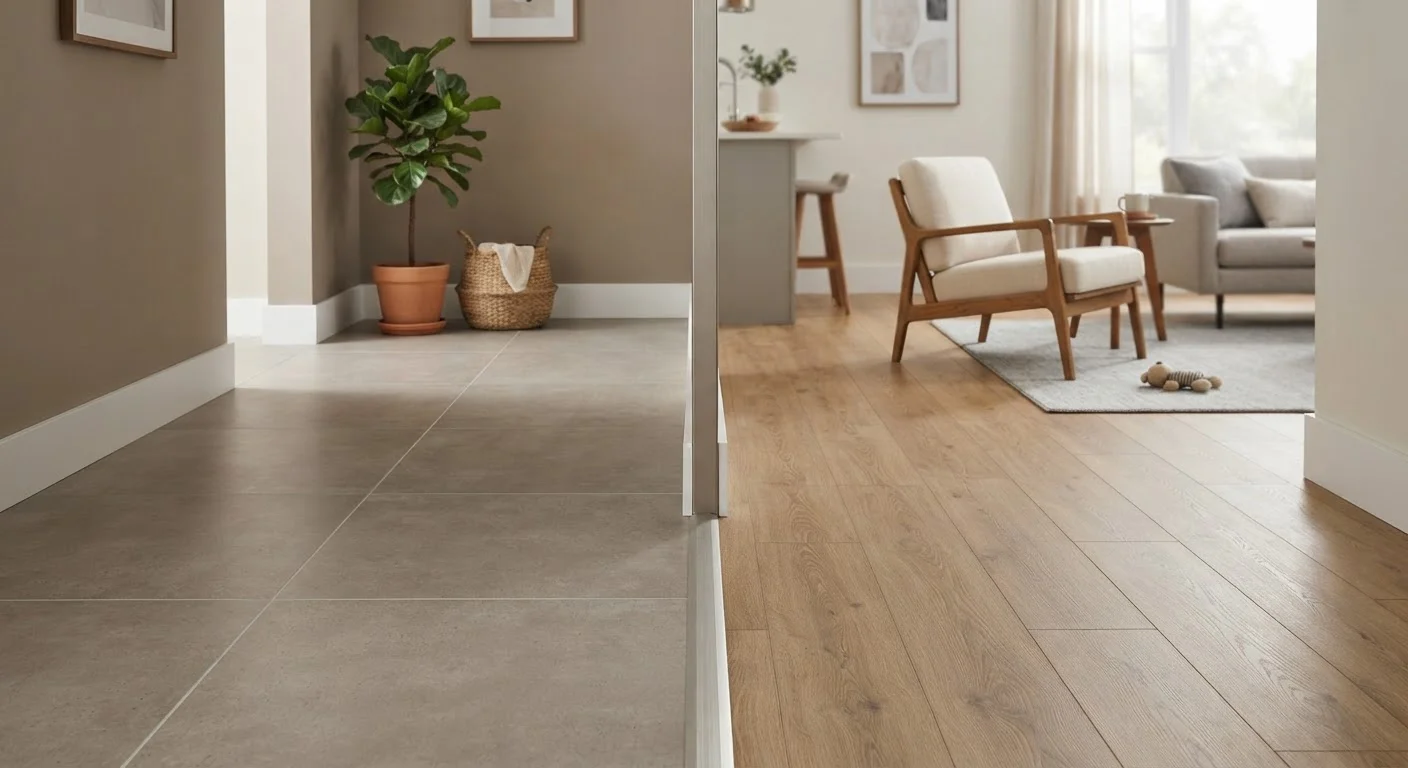
Photo: AdvisorBooth.net editorial
Key Takeaways
- Tile is harder and more heat-resistant, making it ideal for kitchens, bathrooms, and entryways.
- LVP is softer underfoot, quieter, and more forgiving of subfloor imperfections than tile.
- Tile installation is more labor-intensive and typically requires a professional; LVP is more DIY-friendly.
- Both options offer strong water resistance, but tile with properly sealed grout edges out LVP in true wet environments.
- LVP tends to have a lower upfront installed cost, while tile can offer a better long-term return in certain markets.
- Your subfloor condition and the room's function are the two most important factors guiding your choice.
Durability and Lifespan
Ceramic and porcelain tile are among the most durable flooring materials available. Properly installed tile can last 50 years or more, and porcelain - which is denser and less porous - is particularly resistant to scratching and chipping. The main vulnerability is impact: a heavy dropped object can crack an individual tile, though replacing one tile is often straightforward if you've saved extras.
Luxury vinyl plank is highly durable for a resilient flooring product, with most quality options rated for 15-25 years of residential use. The wear layer on top - typically measured in mils (thousandths of an inch) - determines how well the surface holds up to foot traffic and pet claws. Thicker wear layers (12 mil and above) handle active households well. LVP can dent under sustained heavy loads such as furniture legs left in place for years, and it's more susceptible to UV fading in sun-drenched rooms than tile is.
| Criterion | Ceramic & Porcelain Tile | Luxury Vinyl Plank (LVP) |
|---|---|---|
| Expected Lifespan | 50+ years | 15-25 years |
| Water Resistance | Excellent (grout must be sealed) | Very good (edges must be sealed) |
| DIY-Friendliness | Low - mortar, leveling, grouting | High - click-lock floating system |
| Comfort Underfoot | Hard and cold | Softer, quieter, warmer feel |
| Subfloor Tolerance | Requires very flat surface | More forgiving of minor variation |
| Maintenance | Grout sealing required periodically | Sweep and damp mop only |
| Typical Installed Cost | Higher (labor-intensive) | Lower (less labor required) |
| Scratch Resistance | Excellent on tile surface | Depends on wear layer thickness |
Water Resistance and Room Suitability
Both materials resist water at the surface level, but tile is the clear winner in spaces that see standing water or steam regularly. Tile itself doesn't absorb moisture - the consideration is the grout lines, which must be properly sealed and maintained. In bathrooms, tile on both floors and walls is the industry-standard approach for good reason.
LVP is 100% waterproof through its core in most modern products, making it a solid choice for kitchens, basements, and even half-baths. However, if water seeps under floating LVP panels - through gaps at the edges or an improperly sealed threshold - it can become trapped and create conditions for subfloor damage or mold beneath the planks. Proper installation with appropriate transitions and perimeter sealing is essential.
Check Your Subfloor Before Deciding
Installation Complexity and Subfloor Requirements
Tile installation involves setting a mortar bed or using tile adhesive, carefully laying tiles with spacers for consistent grout lines, allowing cure time, and then grouting and sealing. The process requires a very flat subfloor - typically no more than 3/16 inch of variation over a 10-foot span. Significant subfloor leveling work often precedes tile installation. Most homeowners consider this a project for a qualified tile setter.
LVP's floating click-lock system makes it far more DIY-accessible. It doesn't require adhesive on the subfloor, and many products tolerate minor subfloor irregularities better than tile does - though a flat, clean, and dry surface still matters. An expansion gap around the perimeter is required to allow for temperature-related movement. Most rooms can be completed in a single day once materials are acclimated.
Maintenance Over Time
Tile is easy to clean - a damp mop and pH-neutral cleaner handle daily maintenance. The ongoing task is grout care: grout can stain and discolor over time, particularly in lighter shades. Periodic resealing of grout lines (typically every one to three years, depending on traffic and product used) keeps them protected. Efflorescence - a white mineral deposit - can appear on grout in areas with hard water but is generally treatable.
LVP requires even simpler maintenance. It doesn't have grout lines to manage, and most surfaces just need regular sweeping and occasional damp mopping. Avoid steam mops and harsh chemical cleaners, which can degrade the wear layer or cause plank edges to lift. Scratches on LVP, unlike tile chips, tend to be surface-level and can sometimes be minimized with manufacturer-approved touch-up kits, though deep damage typically means replacing individual planks.
50+ years
Typical tile floor lifespan when properly installed
Industry flooring guides consistently cite ceramic and porcelain tile as one of the longest-lasting residential flooring categories available.
12 mil+
Wear layer thickness recommended for active households
Flooring industry guidance generally recommends a wear layer of at least 12 mil for homes with children or pets to ensure adequate scratch and scuff resistance.
Cost Considerations
Tile materials range widely based on type, size, and finish - ceramic tile is generally more affordable per square foot than porcelain. Installation labor is a significant cost factor because of the skill and time involved. Total installed costs for tile are typically higher than for LVP.
LVP materials span a broad price range depending on wear layer thickness, plank width, and core type (WPC - wood-plastic composite - tends to cost more than SPC - stone-plastic composite). The lower labor cost when installed as a floating floor makes LVP a more budget-friendly option in many scenarios. That said, tile's longer lifespan means the cost-per-year calculation often narrows over the decades.
Just as with major financial decisions, understanding the full picture - upfront costs, maintenance expenses, and long-term value - matters more than the sticker price alone. For a useful parallel, the same total-cost thinking applies when evaluating something like leasing vs. buying a car: what looks cheaper month-to-month isn't always the better long-term deal.
The content on this site is for informational purposes only and is not a substitute for professional advice. Always consult a qualified professional for guidance specific to your situation.