
Hydration and Food: How What You Eat Affects Your Fluid Balance

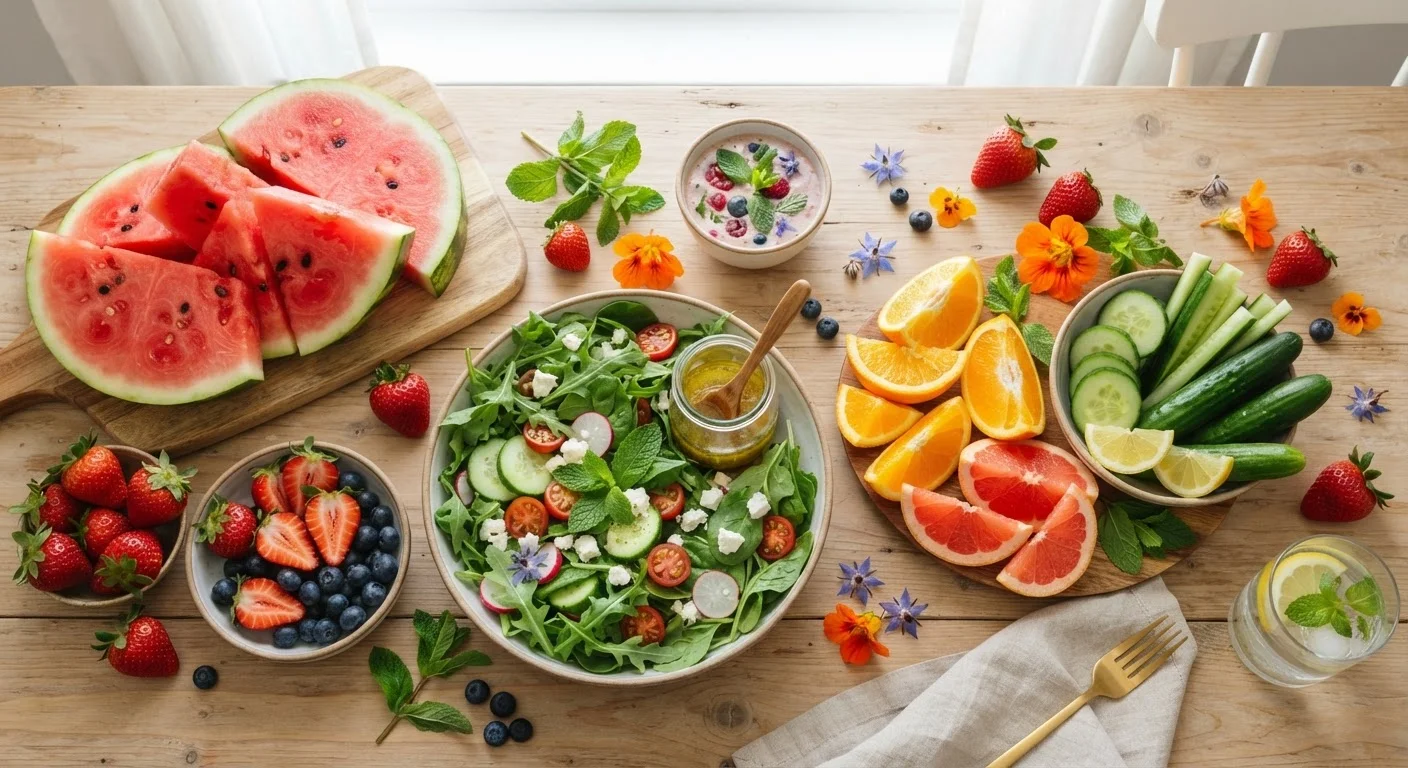
Photo: AdvisorBooth.net editorial
Key Takeaways
- Food can account for a meaningful share of your daily fluid intake, not just beverages.
- Fruits and vegetables with high water content are among the most hydrating foods available.
- High-sodium and high-sugar foods can work against hydration by drawing water out of cells.
- Thirst is a reliable but lagging signal - paying attention to urine color is also useful.
- Individual hydration needs vary based on body size, activity, climate, and overall diet.
Water Isn't the Whole Story
Most of us learned early on that drinking eight glasses of water a day is the gold standard for hydration. While staying adequately hydrated is genuinely important for energy, digestion, and dozens of other body functions, the picture is more nuanced than a water-bottle quota. A meaningful share of your daily fluid actually comes from the food on your plate.
Nutritional research has long recognized that total water intake includes both beverages and the moisture naturally present in food. For people who eat plenty of whole, minimally processed foods - especially fruits and vegetables - dietary sources can make a real difference in meeting daily fluid needs. Understanding this connection can help you think about hydration more holistically, rather than fixating on a single number of glasses per day.
It's also worth noting that hydration needs differ from person to person. Body size, physical activity level, climate, and overall health all play roles. This article is general educational information - not personalized medical advice. For questions specific to your health or a medical condition, a healthcare provider is the right resource.
How Food Contributes to Fluid Intake
Many foods contain far more water than their solid appearance suggests. Cucumbers and lettuce, for example, are composed of roughly 95-96% water by weight. Watermelon, strawberries, tomatoes, and oranges aren't far behind. Even foods that seem dry, like cooked oatmeal or scrambled eggs, contain water absorbed during cooking or naturally present in the ingredient.
~20%
Share of daily fluid from food
Research published in nutrition journals estimates that food contributes roughly 20% of total daily water intake for most adults in Western dietary patterns.
95-96%
Water content of cucumbers and lettuce
According to USDA food composition data, cucumbers and iceberg lettuce are among the most water-dense foods commonly eaten, composed of approximately 95-96% water by weight.
92%
Water content of watermelon
Watermelon's high water content - around 92% by weight - makes it one of the most hydrating fruit choices available, according to USDA nutrient data.
Soups, stews, and broth-based dishes are obvious contributors, but the effect of produce is often underappreciated. A large salad with cucumber, tomato, and leafy greens can deliver several ounces of fluid alongside fiber, vitamins, and minerals. This is one reason that eating patterns rich in whole plant foods tend to support hydration alongside other health benefits.
Interestingly, your body processes water from food somewhat differently than water consumed as a beverage. Food-based fluid is released more gradually as food is digested, which may contribute to a steadier absorption rate - though scientists are still exploring the practical implications of this distinction.
Foods and Habits That Work Against Hydration
Just as some foods support fluid balance, others can create extra demands on your body's water supply. Sodium is a key factor: when you eat a high-sodium meal, your kidneys work to excrete the excess salt, which requires water. Over time, consistently high-sodium diets can increase how much fluid you need to maintain balance.
Added sugars - particularly in sweetened beverages - present a different challenge. Very sugary drinks can draw water into the gut during digestion, temporarily reducing fluid available elsewhere in the body. Highly processed snack foods, fast food, and cured meats tend to be high in both sodium and sugar, which is part of why dietary patterns matter beyond any single food choice.
Alcohol has a well-documented diuretic effect, meaning it increases urine output and can contribute to fluid loss. This doesn't mean occasional moderate alcohol use causes dangerous dehydration for most healthy adults, but it does explain why drinking alcohol - especially in larger amounts - is often associated with feeling worse the next day. If you're curious about how your eating and drinking habits relate to how you feel, understanding your body's hunger and satiety signals can offer a helpful broader lens on internal body cues.
Practical Ways to Think About Hydration and Food
Rather than obsessing over a specific ounce count, it may be more useful to think about the overall pattern of what you eat and drink. A diet that includes regular servings of fruits and vegetables, alongside adequate water and other beverages, generally supports healthy hydration for most people.
Urine color remains one of the most accessible ways to gauge hydration status. Pale straw-yellow typically suggests the body is well-hydrated; darker urine often signals a need for more fluids. This isn't a diagnostic tool, but it's a simple daily check that doesn't require tracking every sip.
Thirst is also worth paying attention to, though it's a lagging signal - by the time you feel noticeably thirsty, you may already be mildly under-hydrated. Eating regular meals with water-rich foods, sipping beverages consistently throughout the day, and being mindful of factors like heat and exercise can all help keep fluid balance steady without requiring precise measurement.
This article is for general informational and educational purposes only and is not a substitute for professional medical advice, diagnosis, or treatment. Always consult a qualified healthcare provider with questions about your health or hydration needs.
Frequently Asked Questions
The content on this site is for informational purposes only and is not a substitute for professional advice. Always consult a qualified professional for guidance specific to your situation.