
Therapy, Counseling, and Coaching: Understanding the Differences

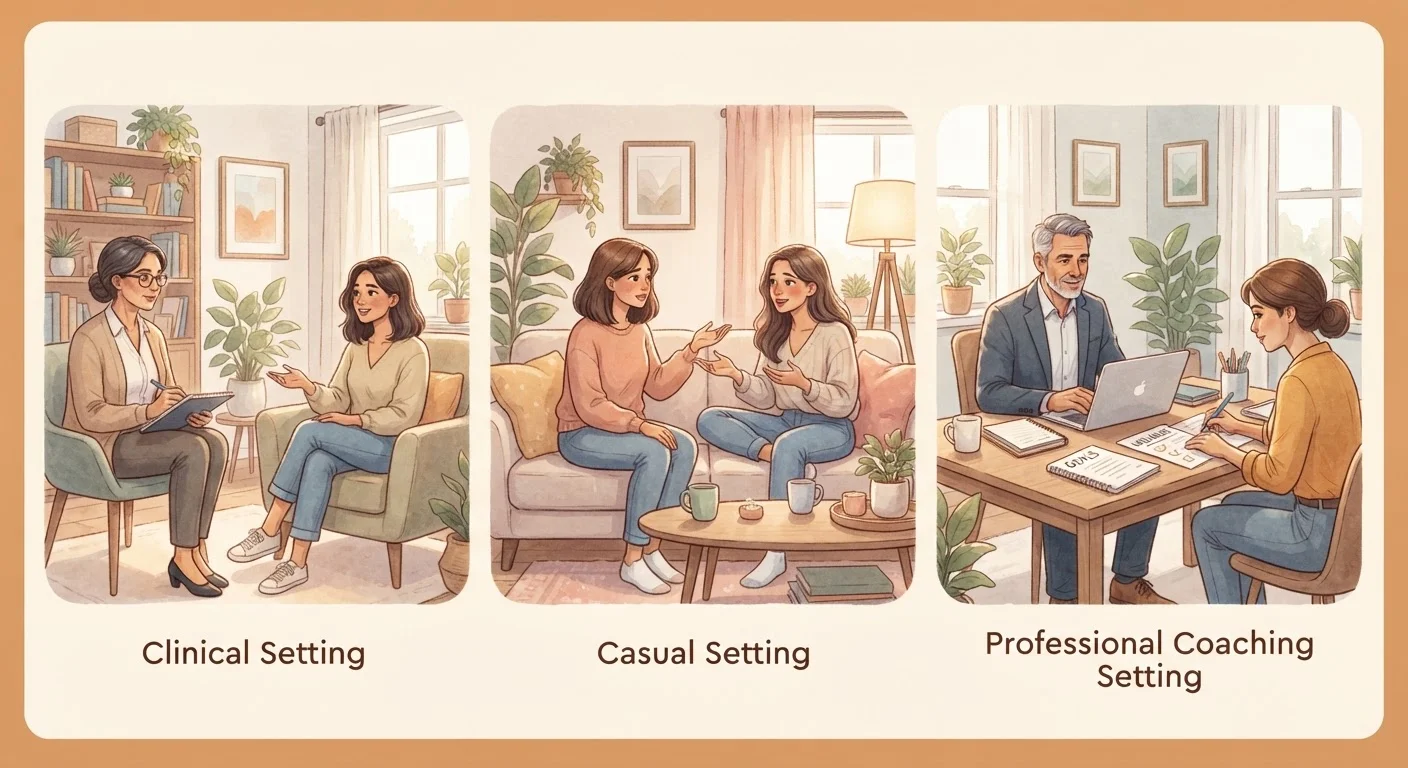
Photo: AdvisorBooth.net editorial
Key Takeaways
- Therapy is typically provided by licensed clinicians and addresses diagnosable mental health conditions.
- Counseling often focuses on specific life challenges and is delivered by trained counselors in various settings.
- Life coaching is unregulated, future-focused, and not designed to treat mental health conditions.
- The right choice depends on your goals, current struggles, and whether clinical care is needed.
- These approaches can sometimes complement each other - they aren't mutually exclusive.
Why the Confusion Exists
The terms therapy, counseling, and coaching get used interchangeably in everyday conversation - and even in marketing materials - which makes it genuinely difficult to know what you're signing up for. All three involve a supportive relationship, talking through problems, and working toward some kind of change. But the similarities can obscure some important differences in scope, training, and purpose.
If you've ever felt unsure whether you need a therapist or just "someone to talk to," you're not alone. Getting clearer on what each approach actually involves can make it much easier to find support that fits. For a broader grounding in mental wellness concepts, this plain-language guide to mental health terms is a useful starting point.
What Therapy Actually Is
Therapy - also called psychotherapy - is a clinical service delivered by a licensed mental health professional. This includes psychologists, licensed clinical social workers, licensed professional counselors, and psychiatrists, among others. Licensing requirements vary by state but generally involve graduate-level education, supervised clinical hours, and board examinations.
Therapy is designed to assess, diagnose, and treat mental health conditions such as depression, anxiety disorders, post-traumatic stress disorder (PTSD), and others. It often explores the roots of emotional patterns, including past experiences, and uses evidence-based methods - such as cognitive behavioral therapy (CBT) or dialectical behavior therapy (DBT) - to support lasting change.
Therapy is appropriate when symptoms are significantly affecting daily functioning, when someone has experienced trauma, or when a diagnosis is already in place. It's also a valid option for people who simply want deeper emotional understanding, not just those in crisis.
| Therapy | Counseling | Life Coaching | |
|---|---|---|---|
| Provider licensing | Required (state-licensed clinician) | Usually required (varies by type) | Not required by law |
| Primary focus | Mental health conditions, emotional patterns | Specific life challenges or transitions | Goals, performance, personal growth |
| Can diagnose conditions | Yes (within scope) | Sometimes (licensed counselors) | No |
| Typical duration | Ongoing, open-ended | Short- to medium-term | Variable, often time-limited |
| Suitable for trauma | Yes | Depends on training | No |
| Insurance coverage | Often covered | Sometimes covered | Rarely covered |
Where Counseling Fits In
"Counseling" is a broader term that can describe services offered by licensed professional counselors (LPCs), school counselors, marriage and family therapists, substance use counselors, and others. In many contexts, the words therapy and counseling overlap significantly - a licensed counselor may provide many of the same interventions as a therapist.
Where counseling tends to differ is in its focus. It often centers on a specific challenge - grief, relationship difficulties, career transitions, substance use recovery, or academic struggles - rather than treating a diagnosable condition. Many counseling relationships are shorter-term and more structured around a defined goal.
School counselors, for instance, are trained to support students through developmental and social challenges, not to provide clinical treatment. Employee assistance programs (EAPs) often offer short-term counseling sessions as a workplace benefit. The setting shapes the scope.
Ask About Credentials Before You Start
What Life Coaching Is - and Isn't
Life coaching is a largely unregulated field. Unlike therapy or counseling, there is no universal licensing requirement to call yourself a life coach in the United States. Some coaches hold certifications from recognized bodies like the International Coaching Federation (ICF), which do require training and adherence to ethical standards - but certification is not mandated by law.
Coaching is forward-focused. A coach helps clients clarify goals, identify obstacles, and build accountability structures - whether that's around career advancement, health habits, leadership skills, or personal development. Coaching is not designed to treat mental illness, process trauma, or address clinical symptoms.
This matters: if someone is experiencing significant emotional distress, depression, or anxiety, coaching is not a substitute for clinical care. Ethical coaches recognize this boundary and will refer clients to mental health professionals when appropriate. If you're new to thinking about mental wellness intentionally, this beginner's framework can help you orient.
Thinking Through What You Actually Need
Choosing between these options is less about which sounds best and more about an honest assessment of what's going on for you. A few questions worth sitting with:
- Are your struggles significantly affecting your ability to function day-to-day?
- Do you have a diagnosed or suspected mental health condition?
- Are you processing grief, trauma, or intense emotional pain?
- Or are you generally well, but wanting to grow in a specific area?
If the first three resonate, therapy with a licensed clinician is likely the most appropriate starting point. If the last describes you more accurately, coaching or short-term counseling may be a good fit. And these aren't mutually exclusive - some people work with both a therapist and a coach simultaneously, addressing different layers of their lives.
Just as mindfulness and meditation are often conflated but serve different functions, therapy and coaching can look similar on the surface while serving fundamentally different needs. When in doubt, speaking with your primary care provider is a reasonable first step - they can help point you toward the right level of support.
This article is for general informational purposes only and does not constitute medical or mental health advice. If you are experiencing a mental health crisis or need support, please reach out to a qualified healthcare or mental health professional.
The content on this site is for informational purposes only and is not a substitute for professional advice. Always consult a qualified professional for guidance specific to your situation.