
The 50/30/20 Rule Explained

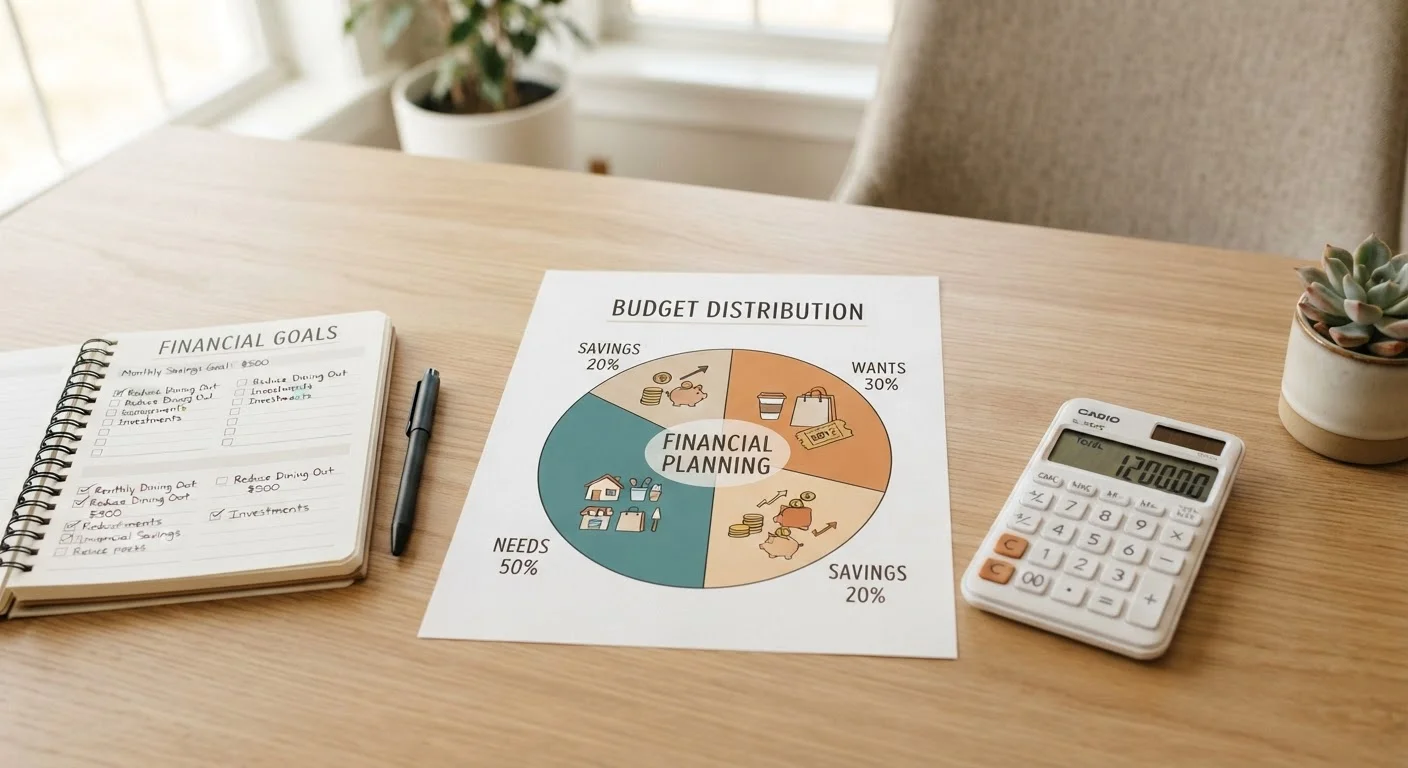
Photo: AdvisorBooth.net editorial
Key Takeaways
- The 50/30/20 rule splits after-tax income into needs (50%), wants (30%), and savings or debt payoff (20%).
- "Needs" covers essential expenses; "wants" covers lifestyle choices - the distinction matters.
- The 20% savings bucket can include emergency funds, retirement contributions, and debt payments beyond minimums.
- High cost-of-living areas or low incomes may make the 50% needs target difficult to achieve.
- The framework is a starting point - adjusting the percentages to your situation is perfectly reasonable.
- Consulting a qualified financial adviser can help you tailor any budgeting approach to your specific goals.
How the Three Buckets Work
The 50/30/20 rule sorts every after-tax dollar you earn into one of three buckets. Understanding what belongs in each bucket - and what doesn't - is where most of the real work happens.
50% - Needs: This half of your income covers expenses that are non-negotiable. Housing (rent or mortgage), groceries, utilities, health insurance premiums, required transportation, and the minimum payments on any debts all qualify. If you could not reasonably function without it, it's likely a need.
30% - Wants: This slice funds the lifestyle choices that make life enjoyable but aren't essential for survival. Restaurant meals, entertainment subscriptions, travel, hobbies, and clothing beyond basic requirements fall here. The needs-versus-wants line can be blurry - a car may be a need, but a premium trim level is a want.
20% - Savings and Debt Repayment: This bucket is where you build financial security. It includes contributions to an emergency fund, retirement accounts such as a 401(k) or IRA, and extra debt payments beyond required minimums. Prioritizing this category can accelerate your progress toward longer-term goals like homeownership or retirement.
50%
Of after-tax income allocated to needs
Housing, groceries, utilities, and minimum debt payments are the core expenses in this category under the 50/30/20 framework.
20%
Target savings and debt-repayment rate
Financial planners commonly cite a 20% savings rate as a meaningful benchmark for building long-term financial security.
~57%
Of Americans living paycheck to paycheck
According to PYMNTS Intelligence and LendingClub research, a majority of U.S. consumers reported living paycheck to paycheck in recent surveys, underscoring why structured budgeting frameworks matter.
This article provides general financial education and is not personalized financial advice. For guidance specific to your situation, consult a qualified financial adviser.
Why This Framework Is Widely Used
The 50/30/20 rule's staying power comes from its simplicity. Unlike detailed line-item budgets that require tracking dozens of categories, this framework reduces the mental overhead of budgeting to three numbers. That accessibility matters: research consistently shows that people are more likely to stick with habits that are easy to start and easy to maintain.
The framework also provides immediate diagnostic value. If you calculate your current spending and find 65% goes to needs, that single data point tells you something important - and gives you a clear direction for adjustment. You don't need a sophisticated spreadsheet to spot the problem or identify where change is possible.
“The goal of a budget is not to restrict you - it's to show you clearly what your money is doing so you can direct it intentionally.”
— Financial Planning Community Consensus, Widely shared principle in personal finance education
For readers new to budgeting entirely, the 50/30/20 rule makes a natural starting point. If you've never built a budget before, our first budget walkthrough covers the foundational steps that pair well with this framework. For a broader view of budgeting methods and philosophy, see Budgeting From Every Angle.
Where the Rule Has Limits
The 50/30/20 framework works best for middle-income earners in average cost-of-living areas. In practice, two groups often struggle to make the percentages work as written.
Lower-income households may find that essential costs consume well over 50% of take-home pay, leaving little room for the 30% wants bucket and compressing savings. In these situations, cutting wants entirely and pushing every available dollar toward savings or debt reduction can make more sense than preserving the original ratios.
Residents of high cost-of-living cities - where housing alone can consume half of a moderate income - face a similar squeeze on the needs side. When rent alone exceeds the 50% threshold, the framework still provides a useful lens, even if the exact percentages need to be revised.
The rule also doesn't address the order in which savings goals should be tackled - emergency fund versus retirement versus high-interest debt - which is a meaningful gap for many households. For those exploring options beyond a structured budget entirely, saving strategies for people who dislike budgeting outlines lighter-touch alternatives.
Once your needs are under control and savings are flowing consistently, the natural next step is understanding how to put that money to work. Our Investing Essentials hub covers foundational concepts for beginners. And for strategies around building savings and managing debt effectively, the Saving & Debt hub offers clear, practical guidance.
Putting It Into Practice
Applying the 50/30/20 rule starts with one calculation: your monthly after-tax income. Once you have that number, multiply it by 0.50, 0.30, and 0.20 to set your category targets.
From there, review two or three recent bank or credit card statements and categorize your actual spending. Compare what you spent against your targets. Most people find that this comparison reveals one or two obvious areas where spending has drifted - often in the wants category or in subscriptions that have accumulated unnoticed.
Adjust gradually rather than all at once. Cutting the wants category dramatically overnight rarely sticks. Small, deliberate reductions paired with automatic transfers to savings tend to produce more durable results.
Make a habit of reviewing your budget monthly. Our Monthly Budget Review Checklist gives you a practical end-of-month routine to assess whether your spending is tracking against your targets and where to make course corrections.
The 50/30/20 rule won't solve every financial challenge, and it isn't the right fit for every person. But as a starting framework - one that's easy to understand, fast to calculate, and flexible enough to adapt - it remains one of the more practical tools available for taking meaningful control of your finances.
Frequently Asked Questions
The content on this site is for informational purposes only and is not a substitute for professional advice. Always consult a qualified professional for guidance specific to your situation.