
Cabin Air Filter vs. Engine Air Filter: Two Very Different Jobs

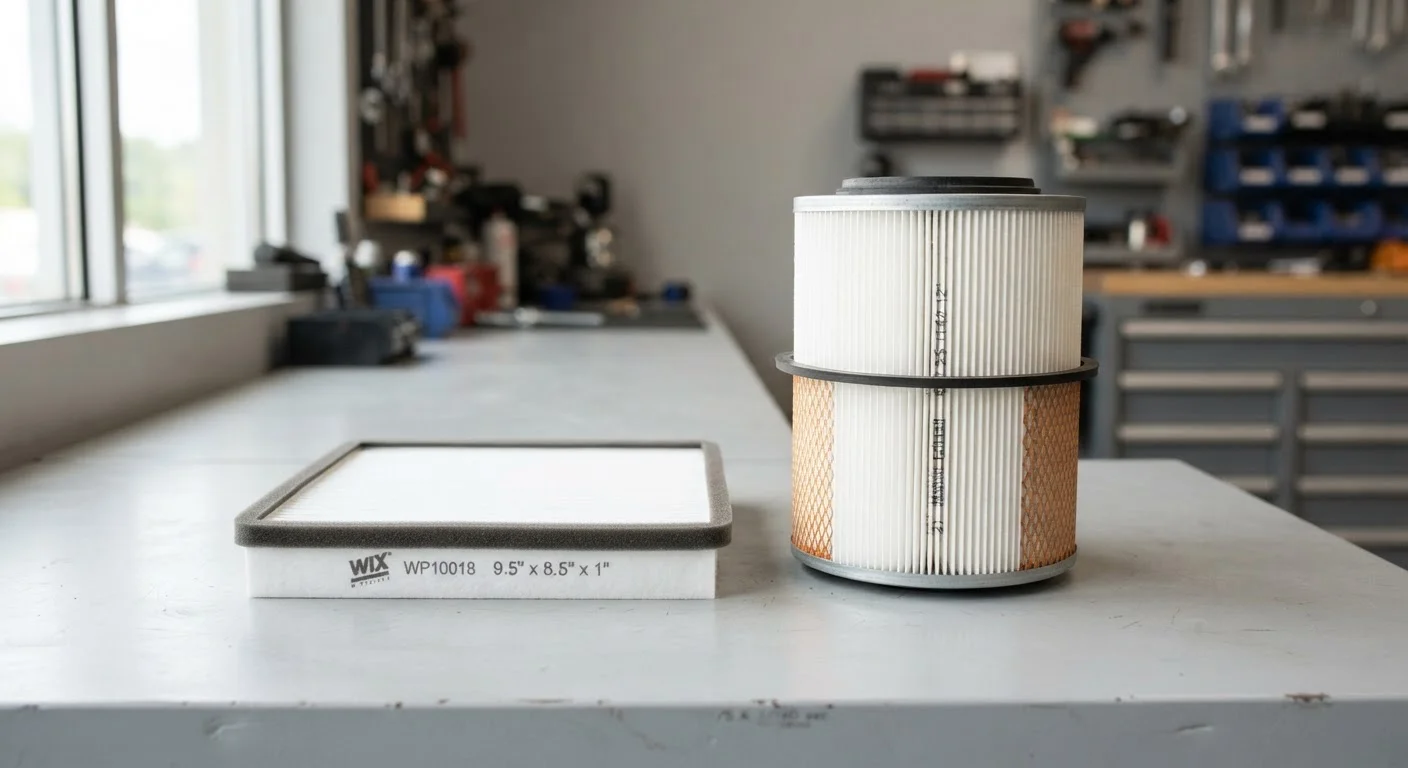
Photo: AdvisorBooth.net editorial
Key Takeaways
- The cabin air filter cleans air entering the passenger compartment; the engine air filter protects the engine from debris.
- A clogged engine air filter can reduce fuel efficiency and engine performance - it is not just a comfort issue.
- Both filters require periodic replacement, but on different schedules depending on driving conditions.
- Neglecting either filter can lead to more expensive repairs down the road.
- Many cabin air filter replacements are DIY-friendly, while engine air filter access varies by vehicle.
What Each Filter Actually Does
Both filters share a common purpose - stopping unwanted particles from entering a system - but the systems they protect are entirely unrelated.
The cabin air filter sits within the HVAC (heating, ventilation, and air conditioning) system. When outside air is drawn into the car through the vents, this filter intercepts pollen, dust, smog particles, mold spores, and other fine contaminants before they circulate inside the passenger compartment. It is purely about the air you breathe while inside the vehicle.
The engine air filter, by contrast, sits at the intake of the engine's air supply system. Internal combustion engines require a precise mixture of air and fuel to run. The engine air filter ensures that the large volumes of air drawn into the engine are free of dirt, sand, insects, and debris - particles that could otherwise cause abrasive wear on cylinders, pistons, and other internal components over time.
In short: one filter works for passenger comfort, the other works for mechanical survival. Both matter, but for very different reasons.
| Criterion | Cabin Air Filter | Engine Air Filter |
|---|---|---|
| What it protects | Passenger compartment air quality | Engine internals from debris |
| Location in vehicle | HVAC system, near glove box or dashboard | Engine bay airbox near intake |
| Typical replacement interval | 15,000-25,000 miles | 15,000-30,000 miles |
| Effect if neglected | Poor cabin air quality, reduced vent flow | Reduced performance, potential engine wear |
| DIY accessibility | Often straightforward | Varies by vehicle design |
| Impact on fuel economy | Minimal direct impact | A clogged filter can reduce efficiency |
Signs Each Filter Needs Replacing
Knowing when a filter is past its useful life can save you money and prevent unnecessary strain on your vehicle's systems.
Cabin Air Filter Warning Signs
- Reduced airflow from interior vents even at high fan settings
- Musty, stale, or unusual odors when running the heat or A/C
- Increased dust accumulation on the dashboard
- Allergy symptoms worsening for passengers inside the vehicle
Engine Air Filter Warning Signs
- Visibly dirty or clogged filter on inspection (gray or black coloration)
- Decreased fuel economy over time
- Rough idle or hesitation during acceleration
- Check Engine light illuminated (in some cases caused by airflow sensor issues linked to a clogged filter)
Check Your Owner's Manual First
Most manufacturers recommend inspecting both filters every 12,000-15,000 miles and replacing them every 15,000-30,000 miles, though driving in dusty or polluted environments shortens those intervals. Always refer to your owner's manual for your vehicle's specific guidance.
Replacement: What to Expect
The replacement process and cost differ notably between the two filters.
Cabin air filters are commonly located behind the glove compartment, under the dashboard, or beneath a panel near the base of the windshield. Many drivers find this a straightforward DIY task - the filter slides out and a new one slides in. Access difficulty varies by make and model, so check your owner's manual before assuming it is simple.
Engine air filters are housed in an airbox - typically a plastic housing connected to a large duct near the top of the engine bay. In many older or simpler vehicles, replacing it requires only unclipping the housing and swapping the filter. Newer vehicles with more compact engine bays can make access more cumbersome, and in those cases a mechanic can handle it efficiently during a routine service visit.
Neither replacement is technically complex for a qualified mechanic, and both are among the lower-cost routine maintenance items. Skipping them, however, can contribute to far more expensive outcomes - reduced engine life or persistent HVAC system problems.
The content on this site is for informational purposes only and is not a substitute for professional advice. Always consult a qualified professional for guidance specific to your situation.